
Introduction
Deploying an AI reception avatar on a screen or kiosk in a public space raises concrete data protection questions. Between voice use, retention of conversational logs, and potential connections to business systems, project managers, DPOs and CISOs must define clear rules before go-live.
This guide offers an operational and actionable framework to progress on GDPR compliance for an AI reception avatar project. It combines required principles, technical and contractual patterns, and configurable recommendations applicable to a professional avatar solution on a screen or kiosk.
Why start GDPR thinking early
An AI reception avatar project is not only a matter of ergonomics or performance. Depending on the envisaged processing (speech recognition, log retention, enrichment by third-party systems), the level of risk to individuals' rights and freedoms may vary. It is therefore recommended to map processing activities and identify sensitive data flows from the design phase.
In other words, treating compliance as an afterthought will often make achieving it more costly and complex. Making precise technical and organizational decisions upstream facilitates drafting contractual clauses with suppliers and limits later scope changes to the project.
DPIA and project governance: decisions to make
Carrying out a Data Protection Impact Assessment (DPIA) can be relevant when the project involves a high risk to individuals. An organization may choose to start this assessment during the pilot phase if the avatar processes voice data or enables interactions tied to user accounts or business systems.
Governance decisions to formalize include: the scope of data processed by the avatar, clearly defined purposes, the data controller, actors acting as processors, and data reversibility rules. Documenting these elements also facilitates justifying technical choices and preparing contracts.
Consent and UX on screen or kiosk: operational patterns
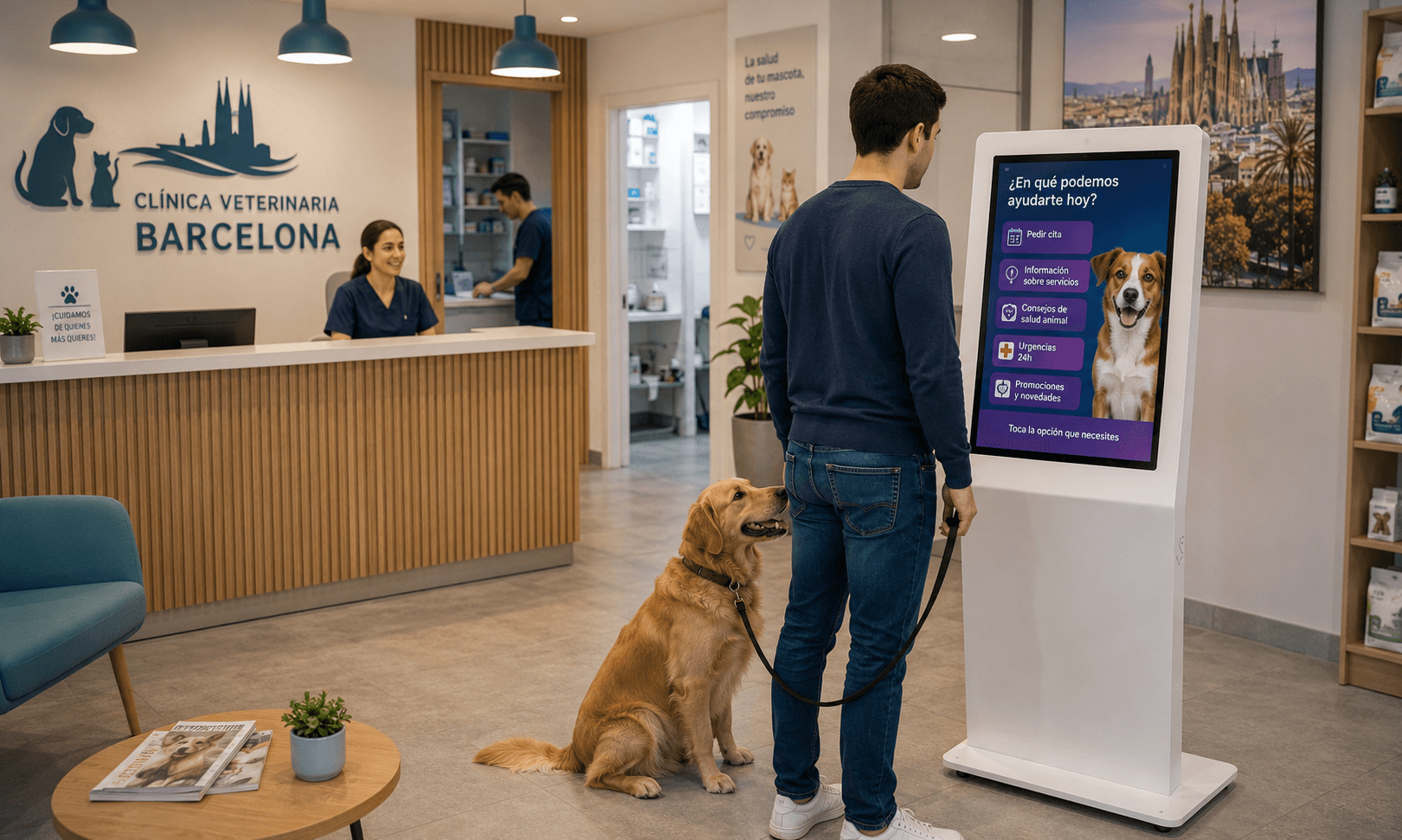
The interaction mode (touch, voice or hybrid) strongly influences consent design. On a touch interface, it is easier to display a banner or information screen before initiating the session. For voice interactions, an audible information message and an explicit consent modality must be planned before any audio capture or transmission.
Three common UX patterns can be considered and adapted to the context: prior information with an acceptance button for touch interaction; a short spoken announcement followed by a vocal or tactile confirmation before recording; a passive mode without recording if the user refuses. These options should be described in user documentation and be easily accessible on the screen.
Audio recordings and consent: points of attention
Audio recording implies specific requirements. If the organization chooses to retain audio excerpts, it is recommended to obtain the individual's explicit consent and inform them about the purposes, retention period and possible recipients. If no recording is retained, it is still useful to state this limitation clearly to reassure the user.
Technically, the solution must allow enabling or disabling audio capture according to configuration. For SANIA, the voice modality is a configuration option that can be enabled or not depending on the project. It is therefore possible to design scenarios where voice is used locally for recognition without audio retention, subject to architecture choices and processing in place.
Conversational logs, anonymisation and retention periods
Conversational logs can contain personal data or elements allowing indirect identification. Publishing a retention policy and implementing anonymisation or pseudonymisation measures are pragmatic ways to reduce risk.
Anonymisation consists of making identification of a person irreversible. Pseudonymisation replaces direct identifiers with reversible keys stored separately. Depending on the project context, an organization may favor pseudonymisation to facilitate auditing and debugging while reducing data exposure.
It is recommended to document the types of logs retained (technical metadata, transcripts, audio excerpts, interface events) and limit retention to only the data strictly necessary for the defined operational purposes.
Transfers to CRM, LLM or other systems: contractual rules and patterns
Any transfer of data to a CRM, an external LLM engine or a third‑party service must be contractually governed. At an operational level, identify what information flows to these systems and apply the data minimisation principle.
Contractual clauses to plan with vendors and integrators include guarantees on data processing, prohibition on using data to train models for unauthorized purposes, commitments on data localisation and obligations to assist with data subject rights requests.
Requiring written commitments from vendors helps governance and aligns technical practices with regulatory requirements.
Clauses to require from vendors and processors:
precise description of processing purposes and controller instructions
prohibition on using data to retrain models without explicit agreement
commitments on data localisation and international transfers
technical and organisational security obligations proportionate to risk
assistance procedures for responding to data subject rights requests
Securing function calls, webhooks and integrations
Integrations expose risk points. Webhooks, APIs and any function call mechanisms must be secured by authentication and authorization mechanisms, and encrypted in transit. It is also useful to limit the scope of data transmitted to what is strictly necessary for the function performed.
In practice, documenting interfaces, limiting API key scopes, implementing secure logging mechanisms and planning penetration tests or security reviews are measures that help reduce operational risks related to integrations.
Data localisation and the edge vs cloud choice
Choosing to execute part of the processing at the edge (on the screen or kiosk) or in the cloud has direct consequences on confidentiality and latency. Local processing can limit transfers to third‑party infrastructure, while a cloud architecture can simplify maintenance and orchestration.
It is recommended to evaluate these options according to purposes, data volume and contractual requirements. SANIA can be deployed in architectures compatible with professional screens or kiosks and can integrate with edge or cloud environments depending on project configuration. This flexibility should be used to prioritise minimising transfers where appropriate.
Operational checklist before go‑live
The checklist below groups concrete decisions and actions to validate before on‑site deployment. It aims to make the project traceable and facilitate review by the DPO and the CISO.
Map processing activities and document the intended purposes
Decide whether a DPIA is necessary and start the assessment in the pilot phase if relevant
Choose the interaction mode (touch, voice or hybrid) and define the corresponding consent UX
Specify whether audio recordings will be retained and formalise consent collection
Define the types of logs to retain, apply anonymisation or pseudonymisation and document the retention policy
Contractually govern any transfer to CRM, LLM or third parties with clauses on purposes, training prohibitions and data localisation (see clause list above for details to negotiate with vendors and integrators).
FAQ
Q1: Is a DPIA always required for an AI reception avatar?
A: The need for a DPIA depends on the level of risk associated with the planned processing. When the avatar processes voice data, retains transcripts or enables interactions tied to business systems, it is often relevant to consider a DPIA. The decision must be documented and justified.
Q2: How to reconcile 24/7 availability with data minimisation?
A: Service availability does not imply retaining all data indefinitely. The system can be architected to store only elements necessary for operation and use anonymisation or automatic deletion mechanisms according to the defined retention policy.
Conclusion
A compliant deployment of an AI reception avatar combines organisational decisions, technical choices and clear contractual clauses. SANIA, as a professional conversational AI avatar configurable for touch or voice interactions and deployable on screen or kiosk, offers the flexibility needed to adapt the architecture to data protection requirements.
To explore how these principles apply to your project and review SANIA configurations compatible with your GDPR and technical requirements, you can request a demonstration or a scoping workshop.