
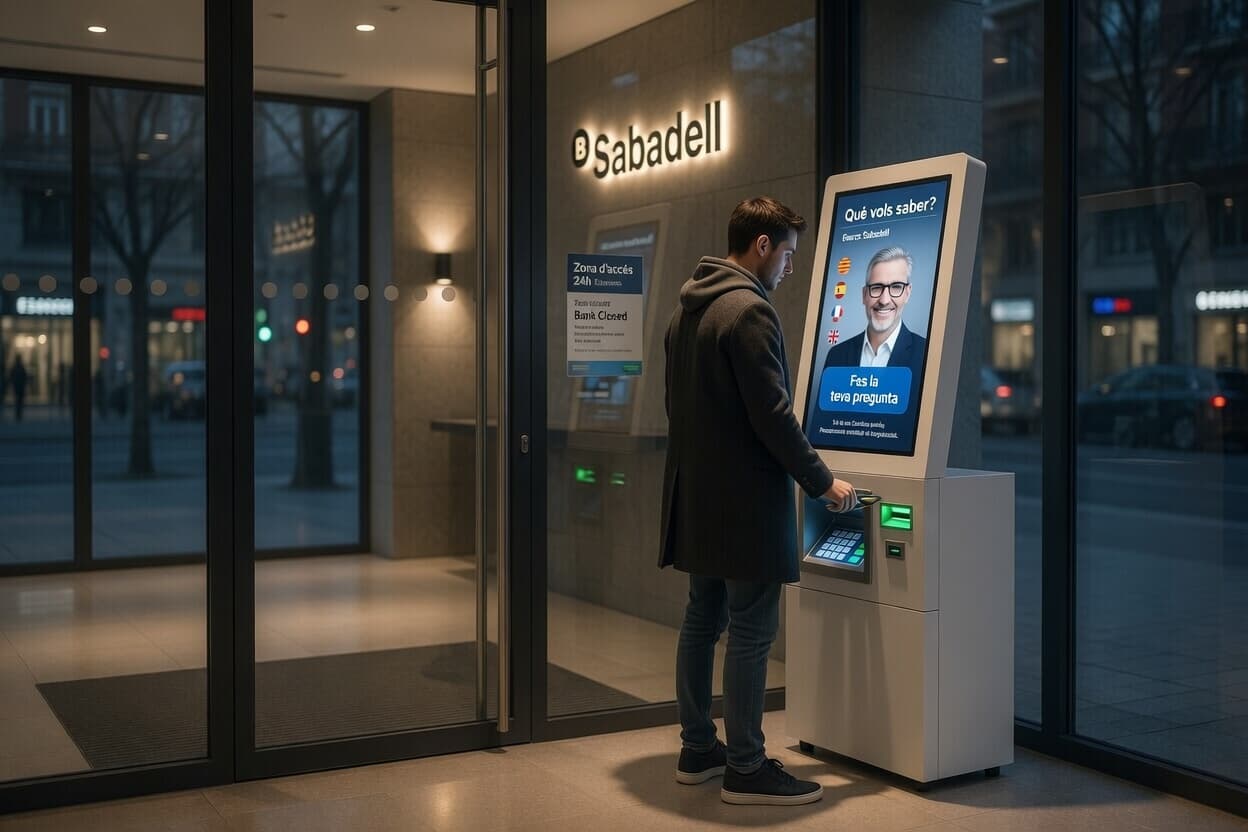
Introduction: why orchestrate multiple LLMs for a reception avatar
Putting a reception AI avatar into production requires trade-offs: responsiveness for visitors physically present, model usage costs, quality of answers and protection of sensitive data. Orchestrating multiple LLMs lets you balance these constraints by routing each request to the engine best suited according to predefined rules.
This article presents concrete routing patterns, hybrid edge/cloud architectures, RAG scenarios that combine specialized models, as well as fallback and traceability rules. The goal is operational: provide decision matrices and typical configurations applicable to screens and reception kiosks.
Essential routing criteria to define
Before any orchestration, define simple, measurable routing criteria. The most useful for a physical avatar are: acceptable latency (perceived response time by the visitor), cost per request or per minute, sensitivity of the data in the request, expected complexity (factual question vs creative generation), and language or compliance constraint.
These criteria are used to compose decision rules that steer each request to a local model, a powerful but costly cloud model, or to a RAG pipeline specialized on the organization’s knowledge base.
Common orchestration patterns
Here are four proven patterns for a reception AI avatar:
1) Latency‑first routing: prioritize a lightweight local model for short interactions (greeting, opening hours, directions) and switch to a cloud model for complex queries requiring fine understanding. This pattern favors perceived responsiveness for the visitor.
2) Cost‑first with cache: use an economical model for the majority of requests, enriched by a caching layer for frequent answers; call a more expensive model only for exceptions. Useful in high‑traffic venues.
3) Sensitivity‑first: route requests containing potentially sensitive data (personal information, customer records) to approved or on‑site models to limit leakage risks. This rule depends on a prior assessment of data flows and internal privacy policies (a DPIA may be required depending on processing). 4) RAG‑hybrid: combine a local retriever over the business knowledge base and one or more generative models selected by complexity or language. The retriever provides documentary sources; the generator produces the response.
Hybrid architectures: local edge + cloud
A hybrid architecture pairs a local (edge) model for basic interactions with one or several cloud models for more demanding processing. The local model reduces latency and allows some data to be processed without leaving the site: this is a possible configuration depending on the project.
Operationally, plan for an orchestrator that evaluates the request against the defined criteria, calls the chosen model and returns the response to the interface. Depending on the setup, multiple LLM engines can be used and a centralized persona defines the avatar identity (avatar + voice + system instructions). SANIA specifically allows combining a persona, LLM engines and system instructions in an adapted configuration.
RAG scenarios and specialized models
Integrating document retrieval (RAG) into a multi‑LLM strategy is often essential for a reception avatar that must rely on business content. A practical approach is to separate the pipeline: a retriever queries the organization’s knowledge base, then one or more models generate the reply based on those passages.
In a multi‑LLM orchestration, you can choose to use a fast, low‑cost model to synthesize short passages, and a higher‑performing model for complex reformulations or critical queries. Important reminder: connecting to the document system and the ingestion webhooks are project‑specific integrations to develop.
Practical fallback and escalation rules
Define clear fallback rules when the chosen model cannot respond (low confidence score, latency too high, technical error). A common fallback is: route the request to an alternative model that is less costly but robust, or to a simplified RAG process. Avoid automating transfers to staff without prior organizational rules; plan the situations where the avatar should invite the user to contact a human team.
Document the conditions that trigger fallback (e.g., keywords, absence of relevant sources, timeouts) and ensure the persona remains consistent across models via shared system instructions.
Maintaining persona consistency in multi‑LLM setups
Using multiple models can fragment the avatar’s tone and style. To preserve a unified experience, centralize: 1) the persona system instructions (role, tone, politeness rules), 2) output sentence templates, 3) rules for handling sensitive information.
SANIA enables configuring a persona that combines avatar, voice, LLM engine and system instructions in a given setup. Use this centralization to apply common stylistic constraints regardless of which model is called.
Traceability, logs and provenance of responses
For governance and compliance, record the provenance of each response: model used, sources consulted (in the case of RAG), prompt or template applied and any post‑processing transformations. These elements facilitate quality reviews and investigations in case of an incident.
Note: retention of logs, audio transcriptions or personal data depends on configuration and regulatory obligations. Whether a DPIA is needed will depend on the processing actually put in place.
Monitoring and indicators to implement
SANIA does not provide indicators out‑of‑the‑box without specific configuration. An organization can nevertheless set up a dashboard that tracks, for example, average latency per model, fallback rate, estimated cost per period and quality samples reviewed by business assessors. These metrics require a defined collection method and external tools or an observability service.
Monitoring cost and quality together allows you to adjust routing rules: if an expensive cloud model is overused for simple requests, reconfigure routing to favor a local model or a cache.
Typical configurations — 4 concrete examples
Configuration A — Low‑latency reception kiosk: lightweight local model for greeting, FAQ and directions; local RAG for technical documents; cloud model for long or ambiguous queries. Routing based on request length and detection of business keywords.
Configuration B — Confidentiality‑constrained environment: on‑premises model for any data identified as sensitive; cloud model only for anonymous, creative queries. Sensitivity rules rely on a pre‑filter that tags the request before routing (configuration and internal policies required).
Configuration C — Multilingual tourist office: local model trained on common destinations for the most frequent languages; switch to a multilingual cloud engine for rare languages or complex questions; RAG over brochures for practical information.
Configuration D — Retail with variable traffic and cost control: economical model in front for 80% of requests, complemented by a higher‑performing model triggered by commercial intent (product availability queries, comparisons). Add an orchestrator‑side cache for frequent answers.
Operational checklist before production
Before deployment, validate:
the routing rules and triggering criteria;
fallback scenarios and error handling;
latency and load tests representative of the location (footfall, noise, network);
compliance of sensitive data flows and impact assessment if necessary;
monitoring strategy (latency, cost, fallback rate, quality samples) and review responsibilities;
persona consistency via shared system instructions and acceptance scripts; and the technical integration of webhooks, function calls or connectors required.
Frequently asked questions
Which elements should remain on‑site rather than in the cloud? Data your organization considers sensitive, or processing where latency is critical, can be handled locally depending on the chosen configuration. The decision relies on internal criteria and risk analysis.
How to evaluate whether a cloud model is justified for a request? Prefer the cloud model for requests needing fine understanding, high creativity or access to capabilities not available locally, and then monitor cost and quality metrics to adjust thresholds.