
Introduction: why an accurate TCO is essential
Deciding on a pilot or a multi‑site rollout of an AI avatar on an interactive kiosk requires a credible figure accepted by executive management and IT. Cost is not limited to purchasing the kiosk: it covers hardware infrastructure, LLM licenses, speech synthesis and recognition, connectivity, integration with business systems, 24/7 maintenance and content governance.
This article provides an actionable method to break down these cost items, estimate token consumption and build pilot / 10 / 100 site scenarios. The objective: give concrete benchmarks to draft a budget, negotiate contracts and define optimization levers.
Cost items to include
To build a complete TCO, group expenditures into CAPEX (initial investments) and OPEX (recurring costs). Each item below should appear in your budget spreadsheet.
Hardware and installation (CAPEX): screen or interactive kiosk, physical stand, audio enclosure, microphones and speakers, any physical protection and on‑site network installation. Include shipping and on‑site installation costs.
Software and licenses (OPEX/CAPEX depending on contract): avatar software license, access costs to LLM engines (token billing or subscription), TTS (speech synthesis) and ASR (speech recognition) licenses if billed separately, OS or kiosk application licenses.
Integrations and development (CAPEX / initial OPEX): adaptation of the knowledge base, API development to connect POS, inventory or CRM, RAG configuration and multilingual testing. Include legal validation of content when required for sensitive business responses. These costs also cover UAT and voice/touch UX adjustments before local production or multi‑site pilot.
Recurring operational costs to budget
Operating an AI avatar involves recurring costs that are often underestimated. Identify and budget clearly:
LLM costs: billed per token or via subscription. Cost depends on request volume, average prompt and response size, and the provider’s pricing policy. Depending on configuration, multiple LLM engines can be orchestrated to balance quality and cost.
Voice costs: TTS and ASR may be billed by minutes, number of requests or subscription. Speech recognition in noisy environments can increase request volume (retransmissions, retries); account for that.
Connectivity and data: bandwidth for API calls, costs of redundant connections to ensure availability, potential storage and transfer costs for embeddings if the solution stores vectors in cloud or on‑premise depending on the chosen RAG configuration.
Step‑by‑step method to estimate LLM consumption (operational formula)
Rather than invent numbers, define measurable variables and apply a simple formula. Here are the steps and the formula to include in your spreadsheet:
1. Measure or estimate traffic: average interactions per kiosk per day, distinguishing touch and voice interactions. 2. Estimate the average interaction size in tokens: user prompt + context sent to the LLM + generated response. 3. Multiply tokens per interaction by the number of interactions over the target period (month/year). 4. Apply the provider price expressed per 1,000 tokens (or other unit).
Compact formula to implement: Periodic LLM cost = (interactions/day x days) x (average tokens per interaction / 1000) x (price per 1000 tokens).
Same logic for TTS/ASR: estimate average audio time generated or processed per interaction, then multiply by the provider’s rate (per minute or per request).
Build scenarios: pilot, 10 sites, 100 sites (calculation model to adapt)
Rather than announcing amounts, structure three scenarios in your spreadsheet using the same variables above. For each scenario, specify: number of units (kiosks), estimated traffic per kiosk, multilingual requirements (number of active languages), whether voice is enabled, architecture (edge, cloud, hybrid) and expected SLA level.
CAPEX costs scale with the number of units for hardware and installation, while some OPEX items may benefit from economies of scale (for example central license, shared hosting, centralized monitoring). Populate columns with: unit, quantity, unit price (vendor), periodicity, periodic total and annualized total.
Include a column for “one‑time integration costs” per site and another for “central run costs” (support, content updates, embeddings hosting). Also provide a cell for contingencies and a sensitivity scenario based on traffic variation or token price increases.
Concrete economic optimization levers
Several technical and operational decisions strongly affect TCO. Here are the levers you can test or negotiate:
Edge vs cloud: processing some requests locally reduces LLM call costs and latency, but increases CAPEX and local maintenance. A hybrid approach can offload complex requests to the cloud while handling common FAQs locally.
Cache and pre‑generation: caching frequent responses or pre‑generating static content lowers the volume of tokens sent to the LLM.
Multi‑LLM orchestration: route inexpensive requests to more economical models and reserve premium models for cases requiring elaborate responses.
Localized TTS: using local voices (edge TTS) for frequent interactions can reduce TTS bills, provided you accept the hardware and maintenance costs.
Prompt and RAG optimization: structure the knowledge base to limit the context sent to the LLM. Well‑designed semantic search can cut unnecessary tokens, but implies storage and embedding refresh costs depending on on‑prem or cloud configuration.
Contractual clauses and SLAs to negotiate
Contracts with LLM, TTS/ASR providers, avatar vendor or integrator must cover specific points to protect your budget and service level:
Pricing and billing unit granularity: specify the billed unit (tokens, requests, minutes), pricing tiers and overage mechanisms.
Availability SLA and penalties: define API availability commitments and any penalties linked to outages affecting kiosk service.
Performance commitments: average latency expectations for responses and for TTS, and maximum acceptable degradation time.
Support and hours: support level (business hours vs 24/7), response times, escalation process and dedicated contact.
Security and data handling: obligations on retention, deletion, data localization, and terms of use for business content provided (RAG, embeddings).
Exit and portability clauses: termination conditions, access to exportable data and modalities to recover the knowledge base if switching provider.
Procurement checklist and calculation template to prepare before RFP
Before launching an RFP or negotiation, prepare a structured dossier containing your business variables and technical requirements:
Description of priority use cases and expected volume per kiosk (voice / touch interactions), by period.
List of necessary integrations (POS, inventory, CRM) and authentication requirements.
Multilingual requirements and expected voice quality (TTS) for each language.
Desired availability level and cadence for knowledge base updates.
Cost estimation methodology you expect from vendors (share your variable spreadsheet to obtain comparable quotes).
Non‑negotiable contractual points: minimum SLA, data security and recovery terms in case of exit.
Frequently asked questions (FAQ) useful for the steering committee
Q: How to justify the gap between high CAPEX and lower long‑term OPEX? A: Present multiple comparison horizons (annualized total cost) and highlight main recurring costs (LLM, TTS, support). The committee must understand the break‑even point and levers to move it.
Q: Should we favor edge to reduce LLM bills? A: Edge reduces some calls to paid models but requires more hardware investment and local maintenance. A hybrid strategy is often the most pragmatic: process low‑value interactions locally and delegate complex cases to the cloud.
Next steps and further actions
To turn this guide into concrete figures, download or create a spreadsheet with the variables discussed and ask vendors to fill in their unit prices against your estimated usage. Run at least one pilot site to measure average tokens per interaction and adjust the 10/100 site scenarios.
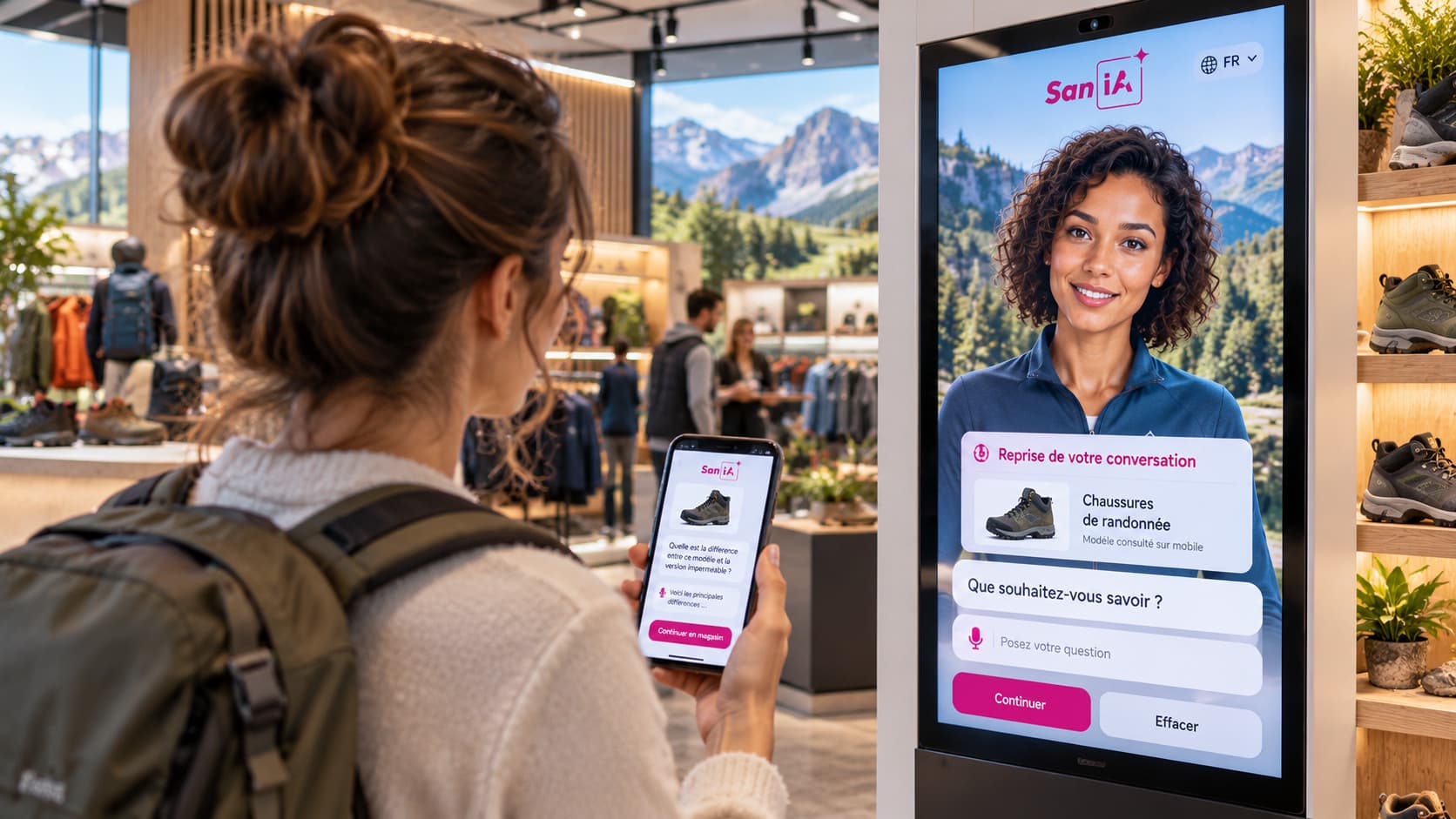
SANIA can be deployed on a screen or interactive kiosk, operate by voice and/or touch, and rely on a knowledge base specific to the organization. To study precisely how these choices impact your TCO in your context (edge vs cloud architecture, multi‑LLM orchestration, TTS/ASR), you can request a demonstration and a tailored costing for your network of sites.