Access method
Traditional kiosks commonly rely on menus, buttons, categories or forms. With SANIA, visitors can also ask a question naturally.

A traditional interactive kiosk gives users access to content and services through a predefined interface. An AI kiosk equipped with a conversational avatar such as SANIA adds the ability to ask questions naturally and retrieve information using the organisation’s context. Both approaches can be relevant, but they solve different types of needs.
An interactive kiosk is primarily a device that lets users act on an interface, often touch-based, to consult information or access functions that were designed in advance. This works very well when the journey is simple, stable and clearly structured.
An AI kiosk adds a conversational layer. With SANIA, visitors can express a question in their own words, by voice or through the available interface depending on the configuration, and the avatar uses conversational AI and the knowledge made available to it to build an answer.
The main difference is therefore not only the hardware. It is the way people access information: predefined navigation on one side, conversation and contextual information retrieval on the other.
The right choice depends on the journey you want to offer and the type of information visitors need.
Traditional kiosks commonly rely on menus, buttons, categories or forms. With SANIA, visitors can also ask a question naturally.
A fixed interface works well for choices that can be anticipated. Conversation is useful when visitors phrase needs in many different ways.
SANIA can use an organisation-specific knowledge base built from selected information and documents.
SANIA can communicate in more than 100 languages, which can be valuable in venues serving international audiences.
A conventional kiosk is still a strong choice when users need to complete a simple and clearly defined action. Selecting a category, consulting a list, viewing a map, filling in a form or accessing a specific service can work perfectly through a structured interface.
This approach also provides a very controlled journey. Every screen, button and step is designed in advance. For a stable and limited use case, it can be easier to explain, test and operate.
There is no reason to add AI everywhere. If the requirement is limited to a small number of explicit and repeatable choices, a traditional interface may remain the best solution.
Short, predictable journey
Limited number of choices
Clearly defined actions
Low content variability
Full control over each screen
An AI kiosk becomes useful when visitors do not know which menu contains the answer or when the same information can be requested in many different ways. Instead of navigating through several levels, the visitor can express the request directly.
SANIA can welcome, inform, answer, orient and guide users using the information available in its knowledge base. This can include documents, practical information, services, products or other business content supplied by the organisation.
Conversation is also valuable for international audiences. SANIA can communicate in more than 100 languages, reducing the need to design a separate navigation path for every possible wording in every language.
AI kiosks are especially relevant when visitor questions vary widely and useful information is rich, dispersed or difficult to organise into one fixed journey.
The choice is not always binary. Touch interaction can remain useful for quick actions while conversation helps users access more complex information. SANIA can work with a touch interface depending on project configuration and can also use voice interaction.
This combination allows visible buttons to remain available for actions that benefit from immediate access, while conversation handles requests that are harder to anticipate. The right balance depends on the venue, ambient noise, hardware, traffic and visitor profiles.
When an action requires a connection to third-party software, such as booking, payment, CRM, ticketing or another business system, that integration must be assessed separately and should not be presented as a native SANIA function.
The best criterion is not which technology is newer, but which experience fits real visitor needs. It is useful to observe questions asked to staff, information that is difficult to find, required languages and the variety of visitor profiles.
Content quality also matters. An AI kiosk does not replace reliable business information. For SANIA to answer within an organisation’s context, the organisation needs to provide clear, consistent and current content.
Finally, define what should remain with people. Some requests require judgement, business expertise or a human relationship. Any kiosk, traditional or conversational, should fit into a coherent overall visitor journey.
Do visitors already know which service they need?
Are questions numerous and phrased in different ways?
Does the audience require multiple languages?
Does information change regularly?
Should some requests be directed to staff?
Do third-party systems require specific integrations?
Value depends on the amount of information, the diversity of visitors and the questions actually asked on site.
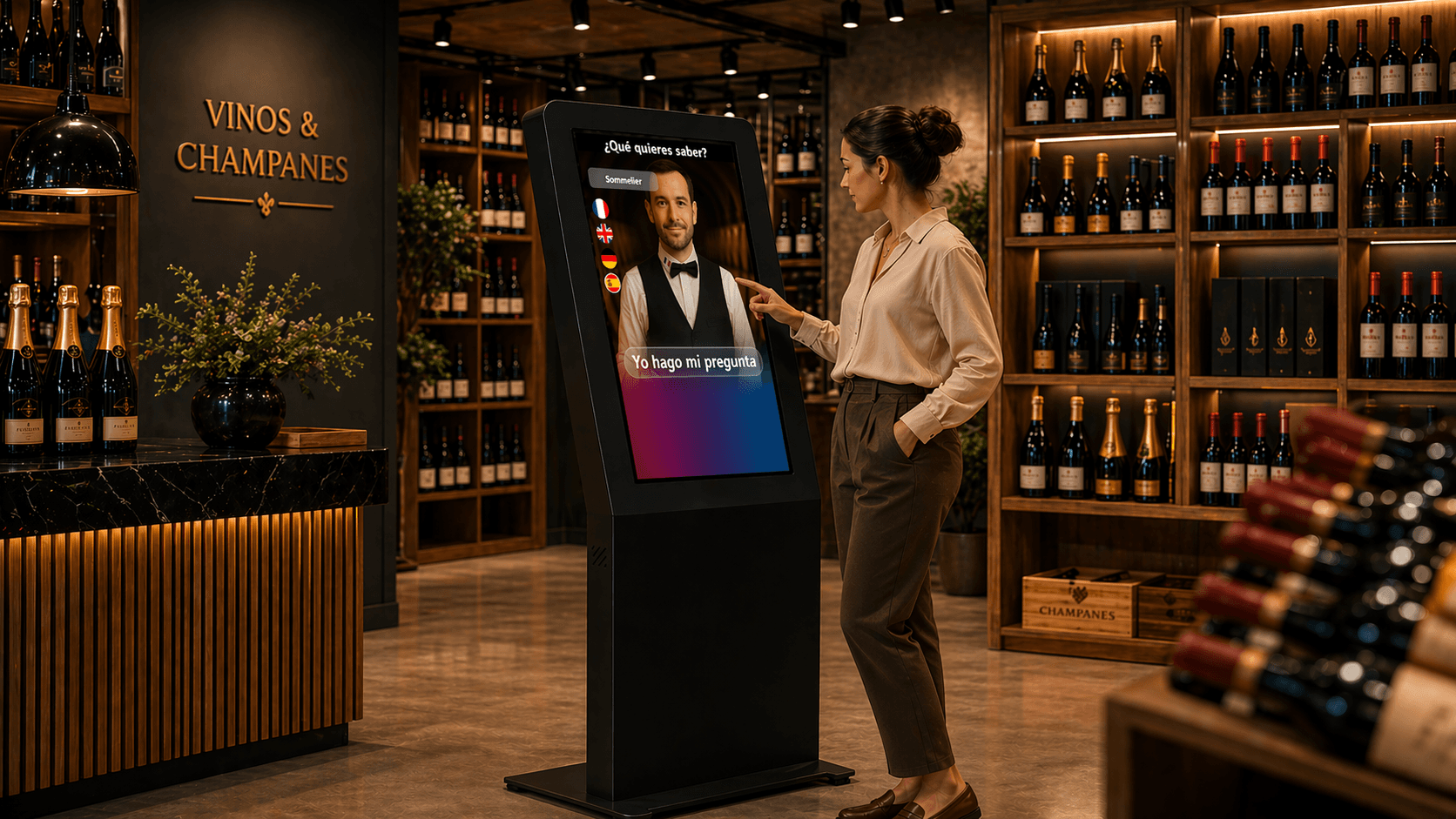
SANIA turns a display or interactive kiosk into a conversational information point that can answer using the store’s own content and knowledge.
Discover →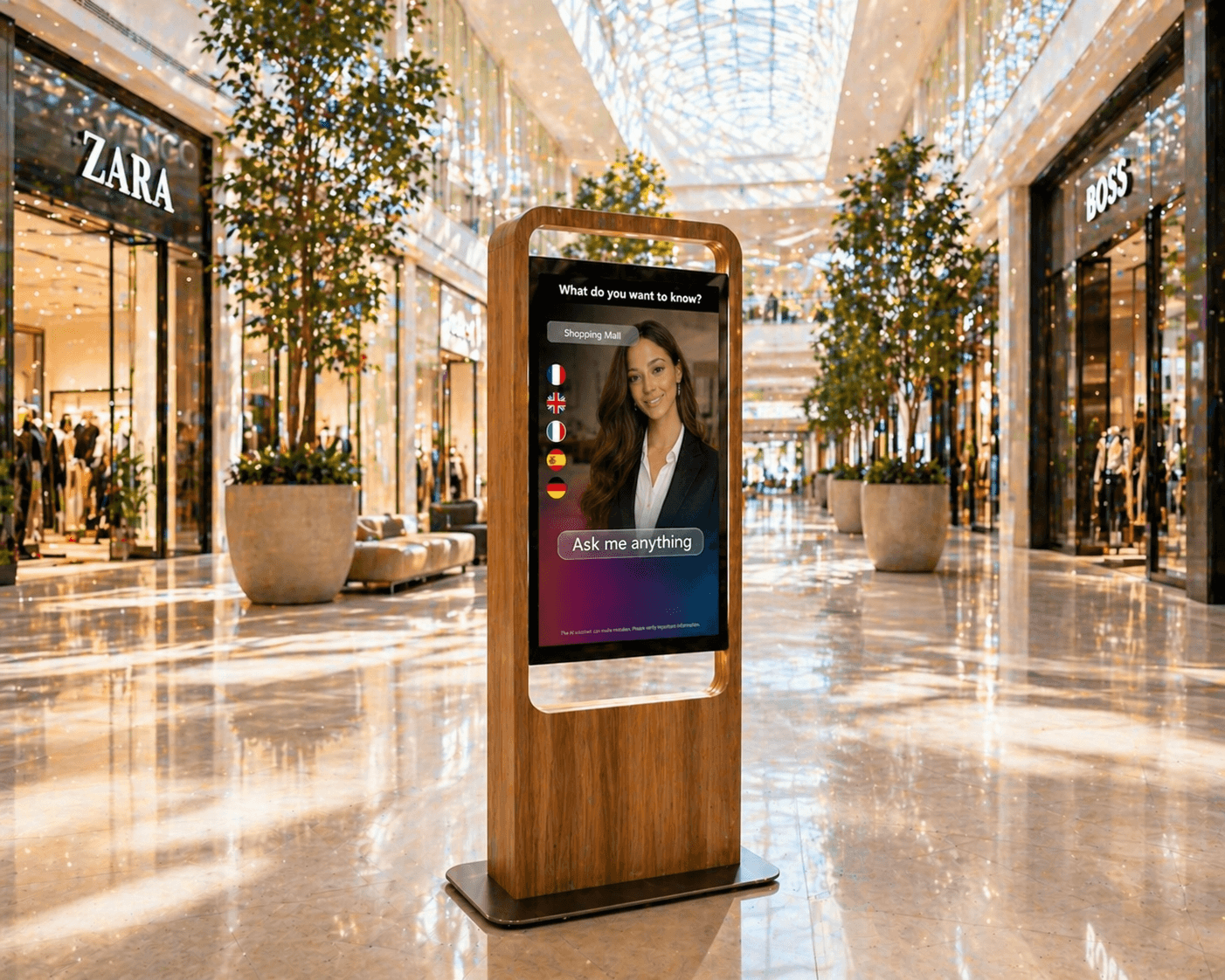
SANIA can centralise useful visitor information and make it accessible through natural conversation on a display or interactive kiosk.
Discover →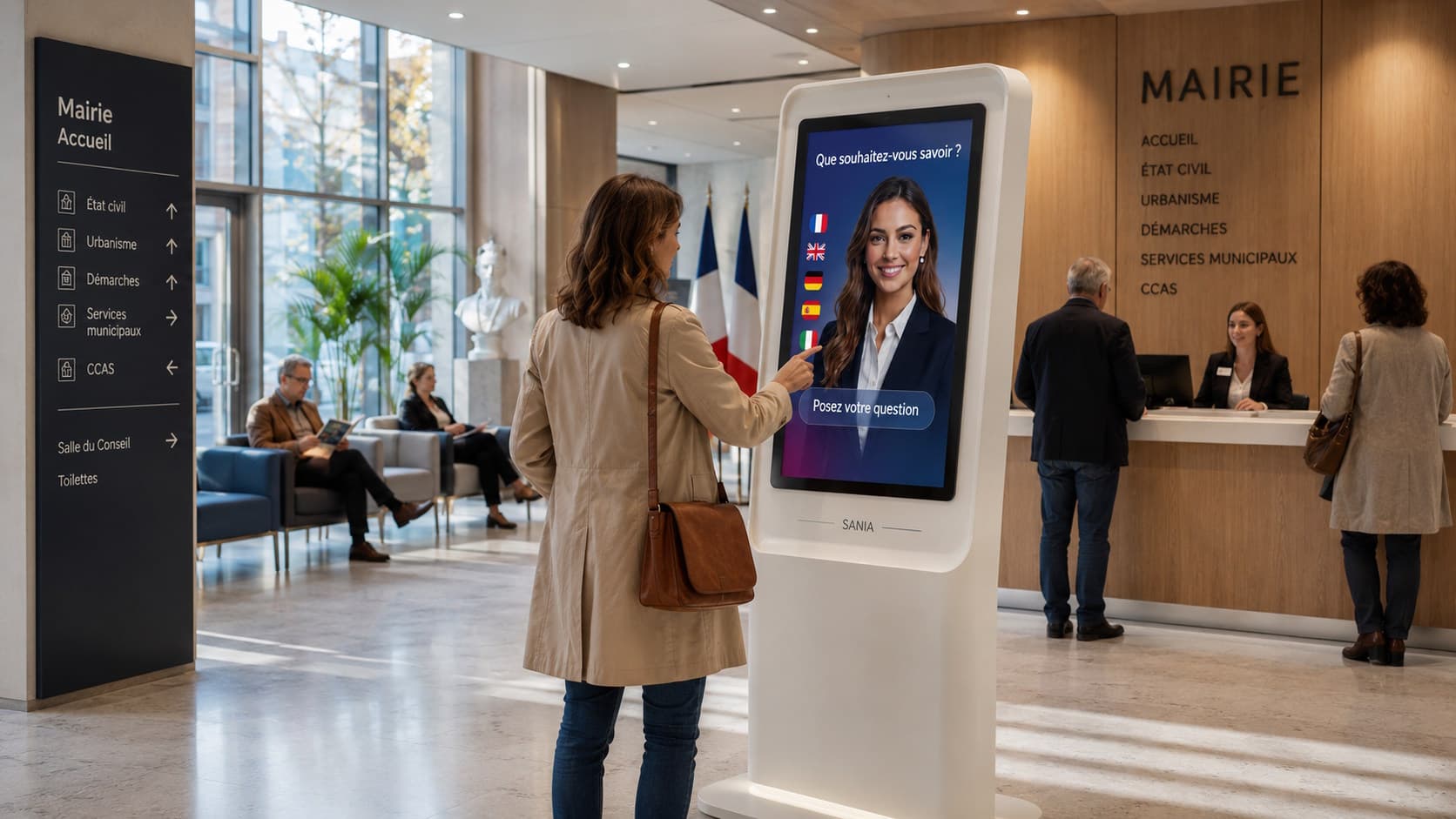
SANIA makes destination information accessible through natural conversation on a display or interactive kiosk.
Discover →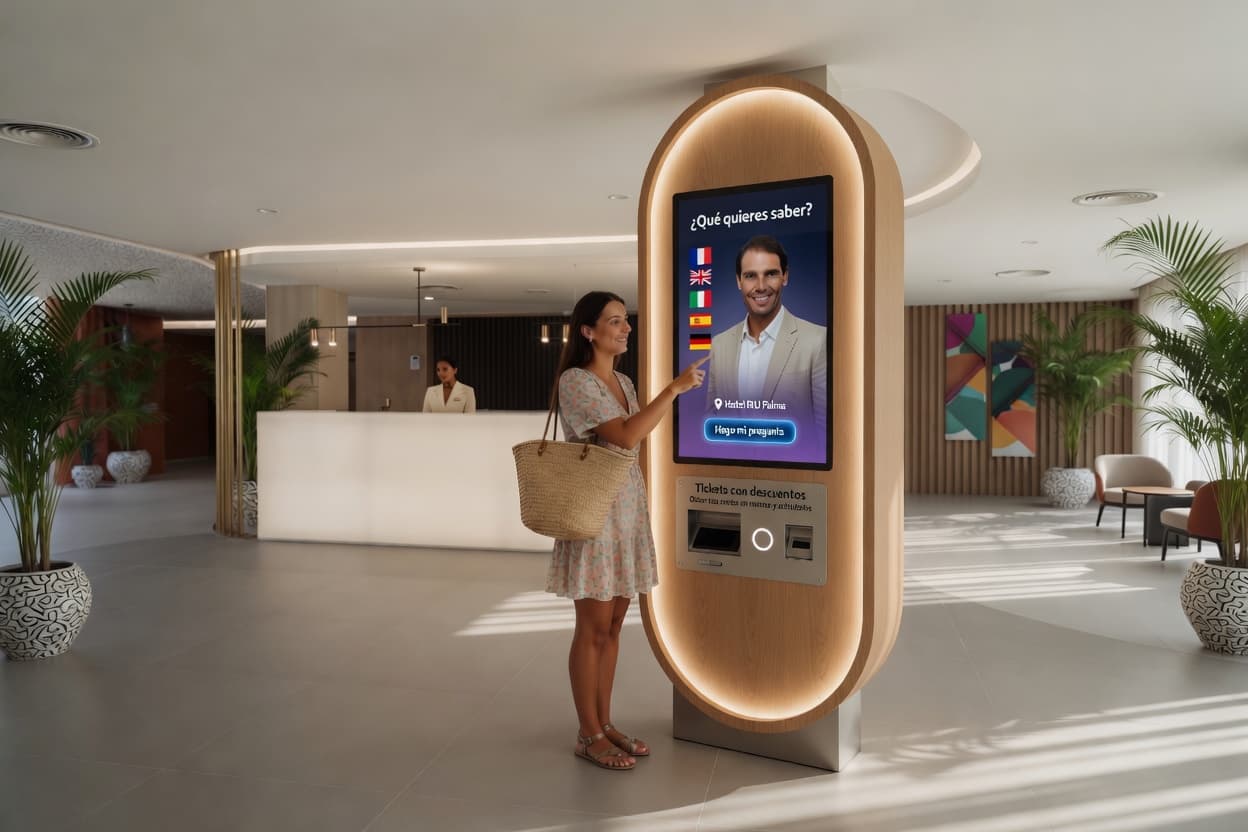
SANIA can answer questions about the property, its services and useful stay information using content supplied by the hotel.
Discover →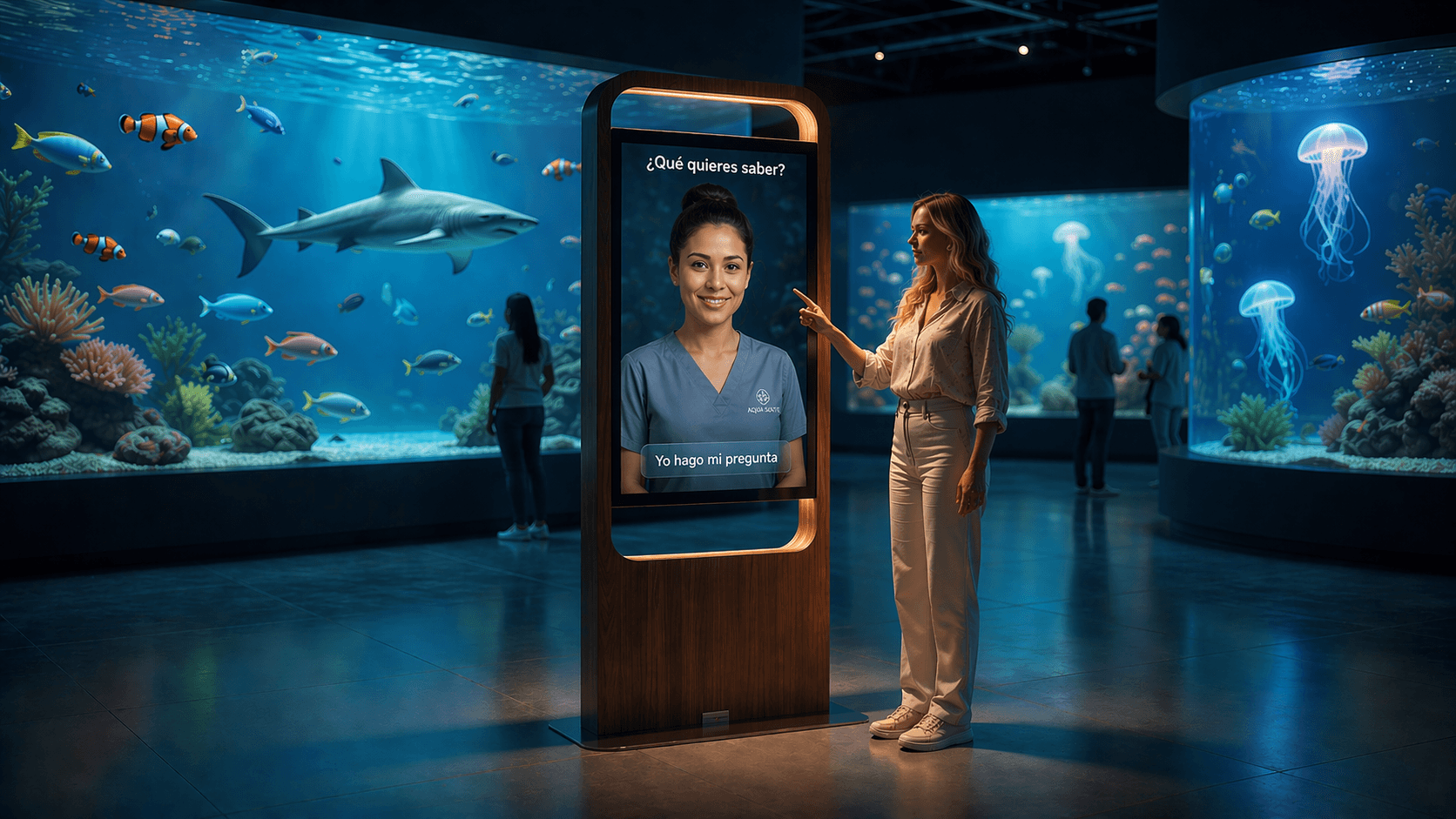
SANIA lets visitors naturally question content made available by a museum or cultural venue.
Discover →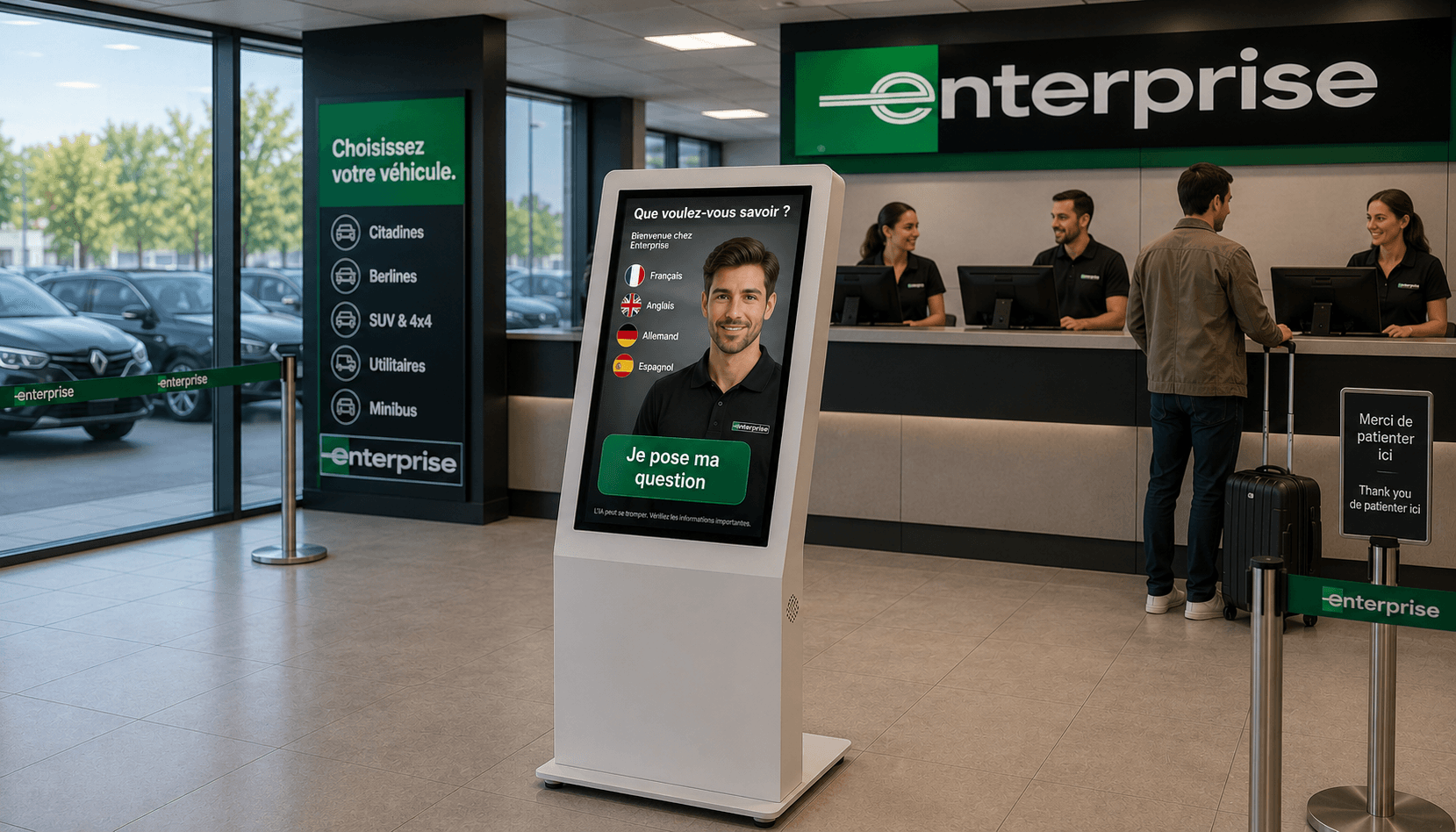
SANIA can welcome, inform and guide visitors using company-specific information on a display or interactive kiosk.
Discover →SANIA can inform and guide users using information supplied and validated by the public authority, without replacing administrative decisions.
Discover →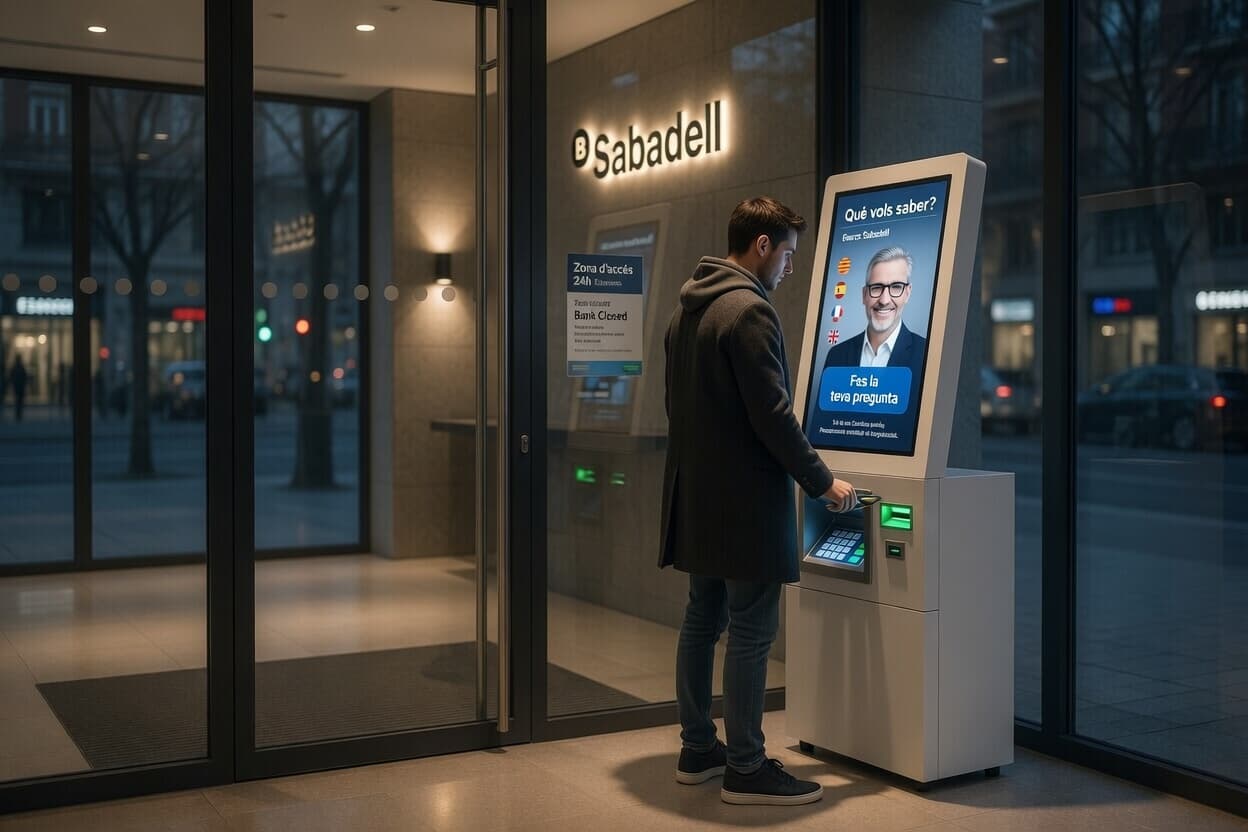
SANIA can present general branch and service information from validated content, without performing transactions or providing financial advice.
Discover →An AI kiosk does not need to replace traditional interfaces. Some tasks are still more efficient with a clear button, list or form. Conversely, a deep menu tree may be inefficient when a visitor simply wants one precise answer.
SANIA adds a conversational interface to physical spaces, supported by organisation-specific knowledge, multilingual capabilities and deployment on compatible screens or kiosks. Each project still needs to be configured around its actual environment.
Comparing interactive kiosks and AI kiosks is therefore a comparison between two ways of accessing information. In many projects, the best experience may combine both instead of treating them as mutually exclusive.
A demonstration shows how visitors can ask SANIA a question and access information specific to an organisation.
A traditional interactive kiosk generally asks users to navigate an interface designed in advance. An AI kiosk such as SANIA also lets visitors ask a question in natural language and receive a conversational answer based on the information available.
No. A touch interface and conversational interaction can complement each other. The right approach depends on the location, audience, hardware and tasks that need to be made accessible.
An AI kiosk can be useful when visitors ask a wide range of questions and direct conversational access to information can make their search easier. The scope should remain defined by the available knowledge and the needs of the location.
Tell us about your environment, visitor questions and the content you want to make accessible. We can show where conversation may help and where a traditional interface may still be the better choice.